
Let's Talk Nitrogen
Bearer of Sensation

Note: this was a quick article I wrote on the fly early today (12 April). Please forgive any typos or errors. Feel free to point out any errors or editorial blunders so I can correct the online version as quickly as possible.
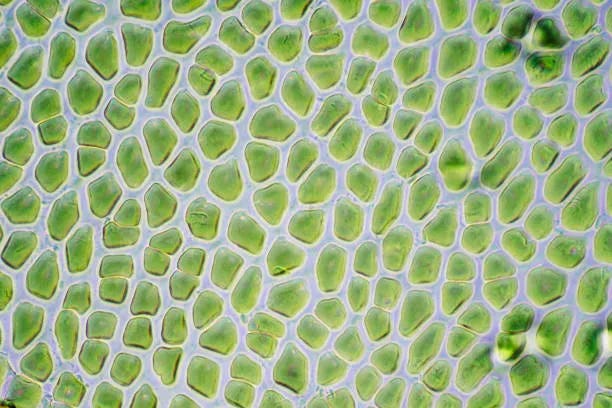
A Quick Review. Nitrogen (N2) makes up approximately 78% of the breathable atmosphere. This means you are breathing in more nitrogen than oxygen (O2, 21%) with every breath. Nitrogen is fundamental to life on this planet. It is a primary constituent for the development of proteins, enzymes, and, for plants, chlorophyll. This is why plants yellow or don’t grow well when there are N deficiencies1. Nitrogen is critical to the porphyrin ring in chlorophyll that coordinates the magnesium atom that allows for photosynthesis to even take place. Nitrogen, as you can see, is fundamental. Without it, life stops dead in its tracks.
Haber-Bosch. Prior to the 20th century, all nitrogen sources were either from plants or animals. Well, technically its all from the atmosphere, but without plants or animals, that N2 remains a gas - a dead element. But as it passes through a plant or a plant through an animal - or in some cases a microbe, but in all cases a living organism - it is enlivened and can bring life to our crops and livestock. Think about a world with protein or chlorophyll?
That was all pre-20th century. In the early 20th century, a process was developed called the Haber-Bosch process that allowed for the production of nitrogen fertilizers by extracting N2 from the air.2 This process requires natural gas to work; you know, natural gas, that fossil fuel derived energy source that’s so much in the news these days? The world has become so dependent on artificial nitrogen fertilizers that it may not know what to do without it3. And the problem is here, right now. Last week I compared actual a grower’s fertilizer pricing from 2025 and 2026, and the prices had literally doubled! Can you imagine trying to farm where you are reliant on artificial fertilizers and your prices just doubled year over year? I can’t.
This craziness isn’t just limited to nitrogen fertilizers either, or the production of fertilizers in general (but that’s for another time). The fact is, we do not produce the majority of the world’s fertilizers in the US or even in North America). The majority are produced in (wanna take a guess?) - China (28M tonnes), Russia (9.4M tonnes), Middle East (20M tonnes), other countries (20M tonnes), while the US and Canada combined to produce only 17M tonnes. That was in 2018. Think about as well where the natural gas is produced as well as where fertilizers are produced. Then think about the transport costs of getting it from there to here once its even made. Yikes!
Fortunately, this isn’t intended to be a detailed review of global fertilizer production, but rather to illustrate that with the impending global fuel crisis - and the gas that’s needed to make fertilizers and diesel needed to transport it - we’re headed for a food crisis if we don’t pivot fast. If China, Russia and the Middle East decide to stop producing or sending fertilizer to the rest of the world - well, you can see where I am going with this.
Funny thing is that we can “gasp again” make nitrogen fertilizers all on our own, without fossil fuels, just like “we” did for millennia before Haber or Bosch ever came up with their confounded process. Well, we need the plants and the microbes and the atmosphere, but otherwise we’re ready to rock.
Nitrogen: The Mediator of Life
As I mentioned earlier, without nitrogen, life on earth ceases. But it must first move through a living organism in order to become “usable” by our crops and livestock to grow food - i.e., biomass, organic matter, compost, poop. Plants do this through a variety of processes including nitrogen fixation; animals do this by eating plants. And through their extraordinary digestive systems (cows especially) animals poop out the most fertile fertilizer one could ever hope for. And its full circle too, all without straining or depleting the world’s resources.
Plants - we cover crop for a variety of reasons, but we should be cover cropping using primarily nitrogen fixing plants (legumes etc) - and there are many. They in turn need nitrogen not just for proteins but for healthy chlorophyll in order to optimize photosynthesis (Pn) that produces carbohydrates that feed the entire food web, including you!
Animals - animals, of course, do not photosynthesize, but they do need protein. And whether you are a meat-eater or not, the value of protein is undeniable in your diet. Anyway, animals eat plants to get the nutrition they need - yes, some animal seat other animals, but somewhere along the line plants are the basis of all diets.
The Circle of Life - So you can begin to see the circle of life here. Nitrogen gas in our atmosphere is consumed by nitrogen fixing plants and turned into usable nitrogen4. These plants are then eaten by animals or they degrade and compost into organic matter to be recycled and consumed again by plants and other organisms. The animals themselves then excrete nitrogen (to wit, here is the value of manure and urine for fertility), and as they die they also compost and release their nutritive components back into the living world, only to be consumed again.

Rudolf Steiner made the distinction between living nitrogen and dead nitrogen. N2 is dead though once it passes through a living organism it becomes living, and usable by most other life forms. He also made the distinction that nitrogen was the “primary mediator between the life force (etheric) and the spiritual element (astral), guiding life into the forms embodied in carbon.” Where’s the carbon? Well, that comes from CO2 primarily5 and cellulose from other life forms (that started at CO2). CO2 is needed for photosynthesis. This is where the C becomes dependent on the N to produce O2 that we all need to breathe. Without N there is no chlorophyll, no photosynthesis, no proteins, no O2, no life, and no spirit.
As we go through this global energy and soon-to-be global food crisis, we need to get back to the basics and realize that we can make practically all of the nitrogen fertilizers we need, heck we can make all of the fertilizers we need. But we have to unthink how we grow food and get back to the basics. It won’t happen overnight and will be much much harder for anyone who farms on large scale or in tropical areas to make this shift overnight. But at smaller scale and for those already in the know, this can happen starting today.
How Does this All Work?
Start by realizing that you need both carbon and nitrogen (the infamous carbon to nitrogen ratio) to make a natural fertilizer. Oh, and the biology. Without microbes, none of this works - did I mention that? Oops! So we need C and N and fungi and bacteria (sounds like you gut, right?) and then we’ve got something work with. Properly balanced compost - at any scale - require about a 30:1 ratio of C to N to feed and fuel the microbes that break down the organic matter (C) and turn it into rich, fertile natural fertilizer. Think grass clippings (N), leaves and twigs (C), and earthworms (soil food web) to start. But it goes beyond that in recognizing that - as I’ve heard - there is more nitrogen in the protozoans in the soil than in anything else. So cycling protozoa should really be at the top of our list when it comes optimizing the nitrogen cycles in the soil to the benefit of plants, animals, and humans (yes, we’re animals). And by working with and using living nitrogen rather than dead nitrogen fertilizers we are creating a farm ecosystem that is spiritually, biologically, minerally, and chemically alive! Then so too will be your food! and YOU!
I wish I had a proper ending for this article, but alas I don’t It started out on a bummer note for industrial ag, but hopefully reinforced, no matter where you are in the food or farming spectrum, that you have options. Fossil fuels may be dwindle because or price of scarcity, but the N2 we all breathe is here to stay.
Please know that the whole process is way more complicated than I made it here - this was about nitrogen. Plants have many many mineral nutrients in them that are also fundamental to life. All minerals came from the cosmos - at least initially - then rocks, then plants, then animals. Life is complicated and complex. The fact that it is all cosmic, beautiful and right at our fingertips is really the point!
Nitrogen gets a bad rap sometimes because of its overuse and misuse in global agriculture. This could mean anything from urea volatilization to run off from dairy CAFOs, or farms that spread shit like its, well, shit.
And with the coming energy crisis, it could lead to major global food shortages and further degradation of arable land (whatever’s left of it in parts of the world).
The conversion of atmospheric nitrogen into biologically available forms is exclusively performed by nitrogen-fixing bacteria (such as Rhizobium in legume root nodules or free-living soil bacteria like Azotobacter) and, to a minor extent, by abiotic processes like lightning.
Yes, any discussion about carbon becomes a longer discussion that can’t get into right now.
The fact that we’re addicted to burning natural gas for nitrogen when the air is 78% N is just peak irony. That fertilizer price spike in 2026 is a massive wake-up call. Love the focus on getting back to 'living' nitrogen. Thanks for the post.
Brilliant article. Important to share this necessary information. Friends, Now is the time for all to consider an organic victory garden at home, or at least a big bucket tomato plant or micro greens on your kitchen counter. Self sufficiency May become mandatory so please learn gardening now.
Only because you asked… 2 typos.
1. toward end of second paragraph, I believe you are missing the word “not.”
2. Second to last paragraph before the numbered paragraphs at end, there is a missing period.